
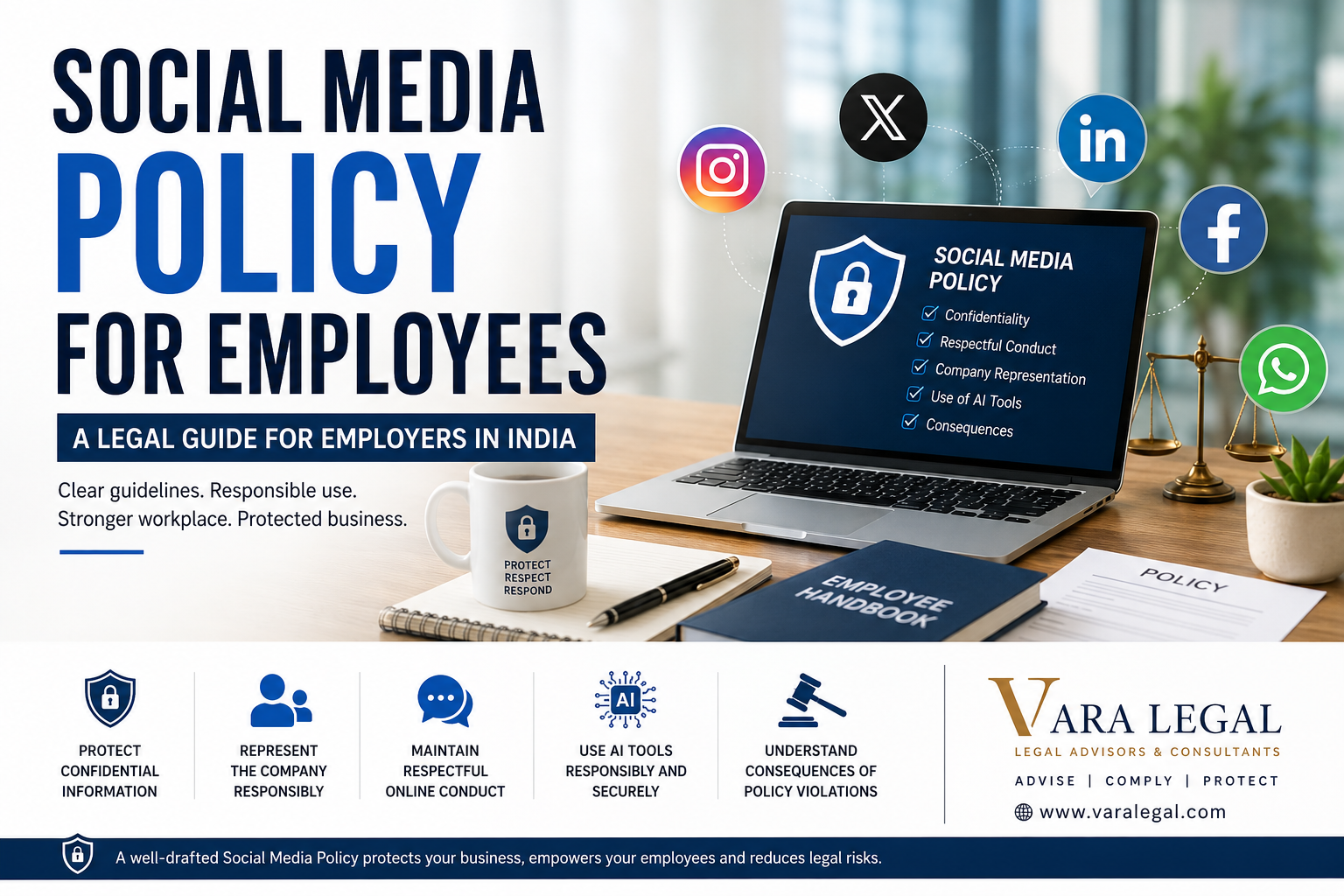
Think about this for a moment. An employee shares a picture of their workstation on LinkedIn to celebrate a promotion. Harmless? Maybe. But what if that photograph unintentionally captures customer records, financial reports, an unreleased product design, or confidential business information in the background? A single post can create significant legal and commercial risks, even if there was no intention to cause harm. That’s exactly why every organisation needs clear guidelines on what can and cannot be shared online. Social media has become an integral part of our professional lives. Employees use LinkedIn to celebrate promotions, Instagram to share workplace moments, X to express personal opinions, and WhatsApp to communicate with colleagues and clients. While these platforms have created new opportunities for networking and brand building, they have also blurred the line between personal expression and professional responsibility. This raises a question that employers often ask: Can an employer tell employees what they can or cannot post on social media?Surprisingly, Indian law doesn’t have a single legislation that answers this question. Instead, the answer lies in a combination of employment contracts, company policies, confidentiality obligations, and laws such as the Information Technology Act, the Digital Personal Data Protection Act, 2023, the Copyright Act, and, in certain situations, the POSH Act. In other words, whether an employer can take action often depends on what was posted, where it was posted, and whether it affected the employer’s legitimate business interests. Now one more related question: Does Freedom of Speech Mean Employees Can Post Anything? This is perhaps one of the most common misconceptions. Employees certainly enjoy the freedom to express their personal views but this right is not absolute and is subject to the reasonable restrictions prescribed under Constitution of India. Moreover, the constitutional guarantee does not entitle an employee to disregard contractual obligations voluntarily undertaken during the course of employment. For example, an employee cannot ordinarily justify the disclosure of confidential business information, customer data, trade secrets, or proprietary documents merely by claiming a right to free speech. Similarly, making statements while presenting oneself as an authorised spokesperson of the organisation may have legal and commercial consequences. The objective of a Social Media Policy should therefore not be to restrict legitimate personal expression but to establish reasonable boundaries that protect the organisation’s confidential information, reputation, intellectual property, and legal interests. Common Mistakes Employers Make One of the most common mistakes employers make is adopting a generic Social Media Policy downloaded from the internet and assuming that it will adequately protect the organisation from legal or reputational risks. While such templates may appear comprehensive, they are rarely tailored to the organisation’s specific business operations, regulatory environment, or internal governance framework. A policy that is not aligned with the employer’s contractual documentation, disciplinary procedures, and operational realities is often of limited practical value and may be difficult to enforce. Another frequent oversight is treating the Social Media Policy as a standalone HR document rather than integrating it with the organisation’s broader compliance framework. In practice, the policy should operate in conjunction with employment contracts, confidentiality and non-disclosure obligations, codes of conduct, information security policies, data protection policies, intellectual property policies, whistleblower mechanisms, and disciplinary procedures. Inconsistencies between these documents may create ambiguity regarding employees’ obligations and weaken the employer’s position in the event of disciplinary or legal proceedings. Employers also tend to overlook the fact that social media risks vary significantly across industries. A healthcare organisation may need to focus on protecting patient confidentiality and sensitive personal data, whereas a technology company may be primarily concerned with safeguarding source code, proprietary algorithms, software architecture, and trade secrets. Similarly, manufacturing businesses may face risks relating to disclosure of product designs, production processes, and supply chain information, while financial institutions must also consider sector-specific regulatory obligations and market-sensitive information. A standardised policy cannot adequately address these distinct risk profiles. Another common mistake is drafting policies using vague or overly restrictive language. Broad prohibitions that simply require employees to “protect the company’s reputation” or “avoid negative comments” without clearly defining prohibited conduct may create uncertainty and lead to inconsistent enforcement. A legally sound policy should clearly identify the categories of information that are confidential, specify who is authorised to make public statements on behalf of the organisation, prescribe acceptable online conduct, outline reporting obligations, and clearly set out the consequences of non-compliance. Finally, many organisations fail to periodically review and update their Social Media Policy to reflect changes in technology, evolving workplace practices, and the applicable legal and regulatory landscape. The increasing use of generative AI tools, the growing importance of data protection, and the emergence of new digital platforms have fundamentally altered the nature of workplace communications. A policy drafted several years ago may no longer address the risks faced by modern organisations. A well drafted Social Media Policy should therefore not be viewed as a generic compliance document. It should be a carefully considered governance instrument, tailored to the organisation’s business model, industry-specific risks, regulatory obligations, contractual framework, and legitimate business interests. When appropriately drafted and consistently implemented, it not only mitigates legal and reputational risks but also provides employees with clear guidance on responsible and compliant use of social media. Whether you are a startup establishing workplace policies for the first time or a mature organisation reviewing your existing governance framework, investing in a legally sound and business-specific Social Media Policy is no longer optional. A policy tailored to your organisation’s operational realities and regulatory obligations is far more effective than a generic template and can prove invaluable when addressing workplace disputes or compliance concerns. DISCLAIMER: The contents of this article are intended to provide general guidance on the subject matter and should not be construed as legal advice or a substitute for professional legal consultation.